|
 |
Autotrophic Plant Small Mindedness:
"I've got nothing against those saprophytes. Some of my best friends are saprophytes. But they shouldn't be allowed in the plant kingdom. They should stay in their own kingdom. Whatever that is." |
|
 |
| The chemical symbol for carbon dioxide is CO2. There is one carbon (C) atom connected to two Oxygen (O) atoms. The little 2 beside the O is to show there are two O atoms. |
|
|
|
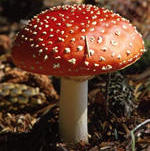
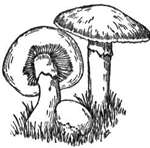
| Mushrooms are a type of fungus. Back in simpler times fungus were considered part of the plant kingdom. Now fungi have their own kingdom called, of all things, the Fungi Kingdom. Fungi are not capable of photosynthesis and therefore do not use carbon dioxide. |
|
|
|
|
|
|
|
|
|
 |
|
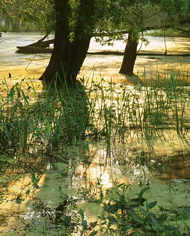
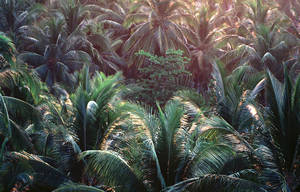
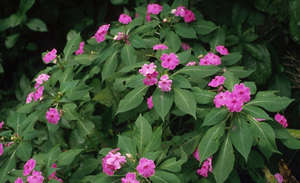
Green plants, like those shown above and below, are autotrophic. Autotrophic plants can make all their food and energy needs from solar energy and just a few inorganic materials - carbon dioxide, water, and some minerals.
|
 |
|
|
|
|
|
|
|
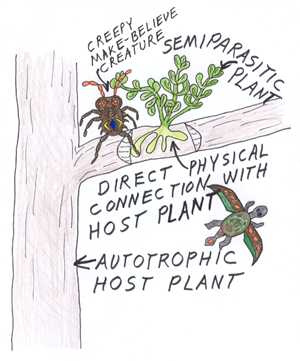 |
| Semiparasitic plants can do photosynthesis and therefore do use carbon dioxide. But they also have to take some of their nutrients from an autotrophic host plant. Why? Because they can't make their own. That's why. |
|
|
|
|
|
|
|
|
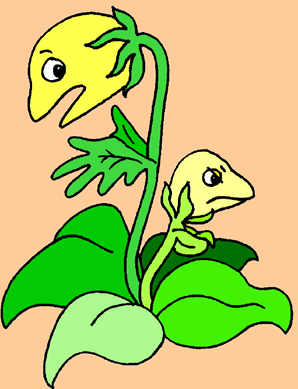
There's nothing like the plants insectivorous,
If we were small or they were big,
We'd hope that they'd ignore us. |
|
|
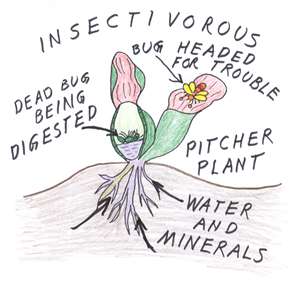 |
| These guys really do eat little insects and other small animals. They do use carbon dioxide during photosynthesis, but they are happiest if they can supplement a few nutrients by eating an occasional animal. Well, it serves us right. We animals are always eating plants. |
|
|
|
|
|
|
|
|
|
|
|
|
|
|
|
|
|
|
|
|
|
|
|
|
|
|
|
|
|
| ANSWER TO QUESTION: |
|
Dear Nichole,
It depends.
It depends on what the definition of a plant is. Remember all that stuff on taxonomy and nomenclature in Dr. Galapagos' beautiful and elegant answer about Dolphins and Whales? Well doggone those persnickity taxonomists! They're doing it to plants too.
But we shouldn't be too hard on them. It's because biologists keep learning more and more about stuff like DNA and cell structure, etc. Science is all about learning new things and learning new things brings change. Change sometimes brings a little confusion and disagreement, even amongst the experts. Fungus and algae, for example, are no longer considered plants, as they were when I was a kid.
Even nowadays not everyone quite agrees on what the definition of a plant is. If you do much research you might be surprised to find there are a few different definitions of plants floating around. It is hard for all the books and websites to keep up with the latest changes and there is also disagreement even among some of the experts on how plants and "possible plants" should be classified.
For example, we found a couple of web sites that said all plants have chlorophyll and are capable of photosynthesis. If that is the definition of a plant then the answer to your question is easy. Because plants that have chlorophyll and do photosynthesis are also plants that use carbon dioxide. Using solar energy to turn carbon dioxide and water into sugar and oxygen is what happens during photosynthesis. When you ask which plants use carbon dioxide, you are really asking which plants do photosynthesis. So if all plants do photosynthesis then the answer to your question is yes, all plants use carbon dioxide.
But....
You knew there'd be a "but" didn't you. Dr. G. never lets anything be that simple. Even in the newer 5 kingdom classification system there are still some living things that are classified as plants by most biologists (we think most - let us know what you think) that are not capable of photosynthesis.
So....
Here finally is our answer according to what we think is the plant classification system accepted by most biologists (we would appreciate hearing from any botanists who can shed further light on the latest thinking in this area):
1)Plants that Use Carbon Dioxide (CO2):
Autotrophic Plants
Green plants (the green color comes from the green pigments in chlorophyll molecules) are completely autotrophic. Autotrophic plants require only solar energy, carbon dioxide, water, and a few minerals to make all the organic compounds necessary to keep themselves going and growing. So all autotrophic plants use carbon dioxide. Carbon dioxide, water, and minerals are all inorganic compounds. Autotrophic plants, then, can get everything they need from inorganic compounds.
Semiparasitic Plants
Some plants can't quite do it all from just water, CO2, and sunlight (and a few other nutrients like nitrogen). Semiparasitic plants have some green parts and can take carbon dioxide from the air, but they can't quite do it all by themselves, so they have to take some nutrients from an autotrophic host plant. In other words, these types of plants actually connect themselves to another plant and take some of the food they need from the host plant. Mistletoe is an example of this kind of plant.
Insectivorous Plants
Another type of plant that uses carbon dioxide for photosynthesis, but still needs a little something extra, are the insectivorous plants. Examples of these are the cool and creepy venus fly trap and pitcher plants. They catch and slowly digest insects and other unfortunate little animals that fall into their traps. Insectivorous plants can live without catching animals but they are a lot healthier if they can catch an occasional bug now and then. Like the semiparasites, they can't make all the organic compounds they need from just air, water, and soil.
2) Plants that don't Use Carbon Dioxide
Holoparasitic Plants
Holoparasitic plants are parasites like the semiparasitic plants which means they have to be directly connected to an autotrophic host plant. But these plants have no green parts and can't do any photosynthesis. They have to get all their nutrients, energy, water, and carbon from the host plant they are attached to. So holoparasitic plants don't use carbon dioxide and don't release oxygen into the air.
The Plants Formerly Known as Saprophytes
The other type of plants that don't use CO2 are the parasitic plants we use to call saprophytes. These plants are now called myco-heterophytes. They have a fascinating connection to the trees that feed them. A fungus, called a mycorrhizal fungus, connects the myco-heterophytes to the tree and transfers the nutrients from the host plant to the parasitic plant. The host plant does all the photosynthesis work to make food, then "shares" some of it, unwillingly no doubt, with the parasitic plant. The fungus feeds the parasite. I assume the fungus feeds itself also.
I learned about myco-heterophytes from a reader who wrote to correct this page. Can you believe it! Yes, I was mistakenly referring to Saprophytes as plants. It is a good example of what I was saying at the beginning of this article. Biologists are still learning and reclassifying all the time. A lot of information sources, especially text books, are not keeping up. The internet is also a source of old, misleading, or just plain wrong, information (my site too, in this case). Keep an open questioning mind as you read and learn.
Links: Food Chain, Food Web, & Food Pyramid
Energy Changes
Energy Intro Page
Dr. Galapagos Index Page.
|
|
|
|
|
|
|